
Last reviewed: 19 July 2026. This article is educational and does not replace individual medical advice.
Quick answer
Use a heated eye massager over closed eyes, at the lowest comfortable heat and pressure, for the manufacturer’s recommended time. Remove contact lenses first, keep the device clean, and stop immediately for pain, blurred vision, dizziness, nausea, flashing lights, marked redness, or worsening symptoms. Do not use after eye surgery or with an active eye condition unless your eye-care professional approves.
In this guide
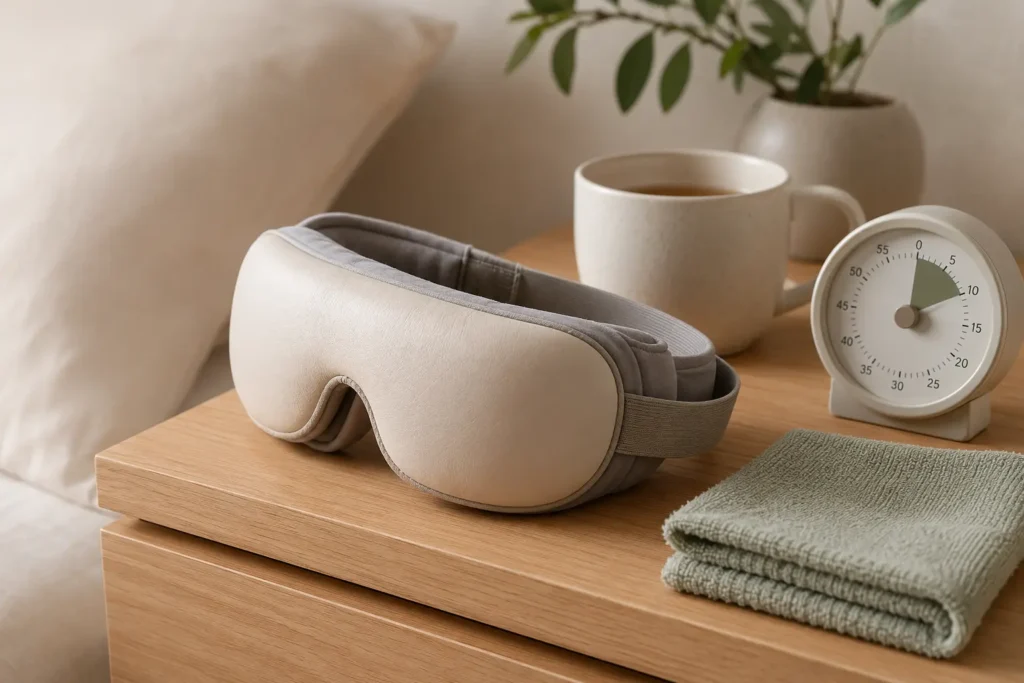
A heated eye massager is a wearable wellness device placed over closed eyes. Depending on the model, it may provide gentle warmth, air compression, vibration, or audio. It can support a relaxation ritual, but it cannot diagnose eye disease or replace an eye examination.
Good wellness content begins by separating three questions: what the tool physically does, what a person may reasonably feel, and what research has actually established. Those are not the same thing. A device can create warmth, pressure, movement, light, scent, or a timed pause without having been proven to treat a medical condition.
That distinction is especially important for heated eye massager guide because product marketing often compresses uncertainty into a short promise. Estzion takes the slower and more useful approach: understand the mechanism, use the product within clear limits, and judge it by comfort, usability, and consistency rather than dramatic claims.
Personal response matters. Skin sensitivity, underlying conditions, medicines, recent procedures, pregnancy, implanted devices, age, and the exact product design can change what is appropriate. When the manual and general online advice differ, the manual for the exact model should guide normal use; when health circumstances create uncertainty, a qualified professional should guide the decision.
What is heated eye massager guide really about?
A heated eye massager is a wearable wellness device placed over closed eyes. Depending on the model, it may provide gentle warmth, air compression, vibration, or audio. It can support a relaxation ritual, but it cannot diagnose eye disease or replace an eye examination.
The practical value of a home wellness tool is usually found in repeatability. A product that is easy to set up, comfortable at a low setting, simple to clean, and clear about its limits is more likely to support a sustainable routine. Complicated features do not compensate for poor fit or vague instructions.
It also helps to define success before use. A sensible goal may be taking a calm ten-minute break, creating a cleaner beauty routine, or adding warmth to a wind-down ritual. Goals such as curing chronic disease, permanently changing anatomy, or replacing professional care are outside what a consumer wellness product should promise.
Realistic benefits and expectations
- a hands-free warm, dark break from screens
- a calming signal at the end of a workday
- consistent session timing compared with reheating a cloth
- optional compression or audio for users who find those features relaxing
These are experience-based reasons someone may choose the product; they are not guaranteed clinical outcomes. Comfort is useful, but it should never be used to ignore symptoms that are severe, new, or worsening.
What does the evidence say?
The American Academy of Ophthalmology notes that warm compresses can help with some dry-eye routines by supporting oils in the eyelid glands. That does not mean every heated eye massager has been clinically shown to treat dry eye. Digital eye strain is also addressed through blinking, screen breaks, viewing distance, lighting, and appropriate vision correction. A device should complement those basics rather than distract from them.
Evidence quality can vary because studies may use different devices, settings, treatment schedules, participant groups, and outcome measures. That is why a careful guide avoids turning one promising study into a universal claim. Product-specific specifications and transparent instructions remain essential.
Research and professional guidance consulted
How to use it more safely
1. Remove contact lenses and eye makeup
Hygiene affects both comfort and product life. Follow the care instructions, keep water away from non-waterproof components, and allow every cleaned part to dry fully before storage or charging.
2. Check the device surface and charge level
Move slowly and pay attention to comfort, skin response, and any change in symptoms. Pause when something feels wrong. For heated eye massager guide, a controlled and repeatable routine is more useful than an intense session.
3. Sit or recline in a safe position
Fit the product without forcing it. Pressure should be distributed comfortably, cords should not create a trip hazard, and controls or release functions should remain easy to reach throughout the session.
4. Select the lowest comfortable heat and pressure
The first session is a comfort test, not a performance challenge. Select the gentlest setting, stay attentive, and increase only when the sensation remains clearly comfortable. Stronger is not automatically more effective.
5. Keep the session short and remain awake
Use a timer and remain awake and attentive. A short session makes it easier to judge response and reduces the temptation to continue simply because the device is already in place.
6. Clean the skin-contact surface and note your response
Hygiene affects both comfort and product life. Follow the care instructions, keep water away from non-waterproof components, and allow every cleaned part to dry fully before storage or charging.
After each session, give yourself enough time to notice delayed irritation or soreness. If the device involves skin contact, follow the cleaning instructions before storing it. Do not share personal-contact devices unless the product can be appropriately cleaned between users.
How the main options compare
| Option | Best understood as | Main limitation |
|---|---|---|
| Warm washcloth | Simple and inexpensive | Cools quickly and must be kept clean |
| Reusable heat mask | Steady warmth without compression | Follow heating instructions carefully |
| Heated eye massager | Warmth plus optional pressure, vibration, or audio | Fit and pressure must remain comfortable |
| Screen-break routine | Addresses a common trigger directly | Requires regular habit changes |
The best option is not necessarily the one with the most features. It is the one that matches the intended routine, has understandable controls, and can be used within comfortable boundaries.
What to look for before buying
- independent heat and pressure controls
- an automatic shut-off timer
- soft, wipeable contact surfaces
- a shape that does not press on the eyeballs
- clear temperature and contraindication guidance
- a return policy in case the fit is uncomfortable
Read the returns and warranty information before purchase. Fit is personal, particularly for wearable devices. A fair return route is part of product suitability, not an afterthought.
If you are comparing products, use the same criteria for each one: intended use, specifications, session guidance, cleaning, contraindications, fit, warranty, and cost. Avoid comparing only the number of modes or the strength of promotional language.
Common mistakes to avoid
- using the device while wearing contact lenses
- high pressure over painful or recently operated eyes
- sharing an uncleaned device
- using while walking, driving, or in water
- falling asleep with heat running
- ignoring sudden visual changes or severe headache
Another common mistake is changing several parts of a routine at once. Introduce one device or setting at a time. That makes it easier to identify what feels helpful and what causes irritation.
When to stop and seek advice
Stop immediately if the device causes sharp or escalating pain, burning, blistering, numbness, weakness, dizziness, breathing difficulty, eye symptoms, a spreading rash, or any reaction that feels unsafe. Urgent or severe symptoms should be assessed promptly.
Before starting, professional advice is sensible when you have a recent injury or surgery, reduced skin sensation, circulation problems, a bleeding disorder, an implanted electronic device, a light-sensitive condition, active infection, unexplained swelling, or medicines that affect sensitivity or bleeding. This is not an exhaustive list.
A wellness tool should make a routine easier—not make you feel pressured to continue through discomfort. Stopping is always an acceptable decision.
How to build a routine that is easy to maintain
Consistency is more likely when the routine has a clear beginning and end. Choose one realistic time of day, keep the device and its accessories together, and decide in advance what a normal session looks like. This removes the need to make a fresh decision each time and reduces the temptation to improvise with longer or stronger settings.
Pair the session with an existing healthy cue. That might be after closing a laptop, before an evening shower, while preparing brushes for the week, or during a scheduled screen break. The device should sit inside a broader routine that includes movement, sleep, hydration, skin care, hygiene, or ergonomics as relevant. It should not become the entire routine.
Start with one variable. If a product offers several modes, change only one setting at a time and keep a brief note of duration and response. This is particularly useful when warmth, pressure, vibration, light, or fragranced products are involved. When multiple variables change at once, it becomes difficult to identify what caused comfort or irritation.
Plan for cleaning and storage from the beginning. A routine that ends with a damp, tangled, oily, or difficult-to-clean device is unlikely to last. Keep a soft cloth or the recommended cleaning supplies nearby, allow components to dry, and store charging cables so they do not bend or create a trip hazard.
How to judge whether the product is helping
Use a small set of honest questions instead of looking for a dramatic before-and-after moment. Was the session comfortable? Was setup simple? Did the product make it easier to take a healthy pause? Did it create irritation, soreness, marks, headache, eye discomfort, or frustration? Would you willingly repeat the same routine at the same setting?
For subjective goals such as relaxation, use a simple zero-to-ten rating before and after the session. The score is not a medical measurement; it is a way to notice patterns. Record only enough information to be useful: date, duration, setting, comfort, and any delayed reaction. Review the pattern after several sessions rather than judging one unusually good or bad day.
For visible beauty or skin goals, standardize photographs if you choose to take them: use the same room, time, lighting, camera distance, and no filter. Avoid daily scrutiny, which can exaggerate normal variation. More importantly, do not delay professional assessment of changing moles, persistent rashes, infection, sudden hair loss, or eye symptoms while waiting for a consumer device to work.
Set a review point. If the device is uncomfortable, difficult to clean, poorly fitted, or unused after a few weeks, the right decision may be to return it rather than forcing the habit. If symptoms persist despite self-care, reassess the underlying problem instead of simply increasing intensity.
Expert tips for a calmer experience
- Choose comfort over intensity. A wellness session should not feel like an endurance test.
- Keep the first week conservative. Short sessions reveal fit and sensitivity with less risk.
- Use the automatic timer. Timers prevent distracted overuse and make sessions repeatable.
- Protect the product. Charge, clean, and store it exactly as directed; damaged devices should not be used.
- Respect individual differences. A setting a reviewer describes as gentle may not feel gentle to you.
- Check claims before sharing them. Describe the physical feature and your experience; avoid turning personal comfort into a medical promise.
Frequently asked questions
Can an eye massager cure dry eye?
No. Warmth may be part of a dry-eye routine, but dry eye has different causes and persistent symptoms need professional assessment.
How long should I use it?
Follow the manual. A short first session—often around 5–10 minutes—is a sensible way to test comfort.
Can I wear contact lenses?
Remove them first. Heat and pressure over contact lenses may be uncomfortable and can complicate hygiene.
Is pressure on the eyes safe?
Pressure should be gentle and around the eye area, not painful force on the eyeballs. Stop if vision changes or discomfort occurs.
Can I use it after eye surgery?
Only with approval from the clinician managing your recovery.
When are eye symptoms urgent?
Sudden vision loss, a curtain or shadow, new flashes or many floaters, severe pain, chemical exposure, or trauma needs urgent professional care.
Key takeaways
- Start low, short, and comfortable.
- Follow the instructions for the exact device.
- Keep expectations realistic and avoid medical promises.
- Clean contact surfaces and monitor skin or symptom changes.
- Seek professional advice when symptoms or health conditions create uncertainty.
Build a calmer, more considered routine
Explore Estzion’s Self Care collection or view the Electric Eye Massager with Heat & Air Compression when it genuinely fits your needs. To learn how products are selected, visit About Estzion. For product questions, contact the Estzion support team.